

Table of Contents
- What Is a Signature Scent and Why It Matters
- Understanding Fragrance Scent Families Explained
- Why Does Perfume Smell Different on Skin: The Science
- How to Test Perfume Properly Before Committing
- Finding Your Signature Scent: A Practical Framework
- Sustainable and Clean Fragrance Alternatives
- Fragrance Etiquette and Professional Settings
- Frequently Asked Questions
Last Updated: October 16, 2026
What Is a Signature Scent and Why It Matters
A signature scent is a fragrance you wear consistently that becomes synonymous with your personal identity, the perfume people recognize as distinctly yours. Unlike rotating through fragrances seasonally or by occasion, a signature scent becomes part of how others perceive you, a subtle but powerful form of self-expression.

The psychology runs deeper than aesthetics. Smell is the sense most closely linked to memory and emotion, so repeated exposure to your fragrance creates a sensory anchor to your presence (Olfactory memory networks: from emotional learning to social behaviors). This is why luxury brands and high-profile individuals invest heavily in finding that one perfect scent, an olfactory signature as recognizable as their voice or style.
At PERFUME IN THE CITY, we understand that finding your signature scent isn't a quick decision. It requires understanding your preferences, testing how fragrances interact with your skin chemistry, and committing to something that feels authentically you. A true signature scent should feel effortless, make you feel confident, and stand the test of time.
Understanding Fragrance Scent Families Explained
Fragrances are organized into distinct olfactive families, each with its own character. Understanding these categories is essential for narrowing down what might work as your signature scent. The major families are citrus, floral, woody, oriental (also called amber), aromatic, and chypre, plus hybrids that blend categories.
Citrus, Floral, Woody, and Beyond
Citrus fragrances are built on bright, zesty top notes from bergamot, lemon, lime, and other citrus oils. They feel fresh and energizing, but are lighter and shorter-lived than heavier families.

Floral fragrances range from light and airy to rich and sensual, featuring white florals like jasmine and gardenia, romantic florals like rose and peony, or tropical florals like orchid.
Woody fragrances emphasize base notes like sandalwood, cedar, vetiver, and oud. They feel grounded and sophisticated, appeal across gender lines, and typically offer excellent longevity and complexity as they dry down.
Amber fragrances (also called oriental) are warm, sensual, and often sweet, combining vanilla, amber, musk, and spicy notes.
Aromatic fragrances blend fresh herbal and spicy notes like lavender, rosemary, and pepper, often categorized as aromatic-woody when combined with woody bases. They feel crisp and sophisticated without being overly sweet.
Chypre fragrances combine citrus top notes with floral hearts and woody-mossy bases. The structure creates a natural progression from bright to deep, making chypre a complex and elegant choice for a signature scent.
The fragrance pyramid helps visualize how these families work. Top notes are the bright, short-lived initial impression. Heart notes emerge after 5-15 minutes and define the fragrance's character.
Why Does Perfume Smell Different on Skin: The Science
This is where many fragrance journeys go wrong: you test a scent in a store, buy it, and it smells completely different at home. The culprit isn't the fragrance, it's your skin chemistry.
Skin Chemistry and pH Impact
Your skin's pH, natural oils, and microbiome fundamentally alter how a fragrance smells on you. The same fragrance will smell noticeably different on different people, which is why blind buying, purchasing without testing on your skin first, is risky, even for premium brands.
Oily skin amplifies projection and longevity because oils hold scent molecules longer; dry skin may cause fragrances to fade faster. Diet, medications, and hormones can also subtly shift how a fragrance develops on you.
Temperature matters too. Heat accelerates the release of volatile top notes, making fragrances feel stronger, while cold slows diffusion, so summer favorites can feel muted in winter.
This is why testing on your skin, not paper strips, is non-negotiable when finding your signature scent. A scent that smells perfect on a tester strip might feel too heavy or too light on your skin.
Fragrance Longevity vs. Sillage
Longevity is how long a fragrance lasts on your skin, measured in hours. Sillage describes how far it projects, the scent trail you leave behind. These qualities don't always correlate: a fragrance can have excellent longevity but minimal sillage, or strong sillage with moderate longevity.
Concentration affects both. An eau de toilette (3-8% concentration) is lighter than an eau de parfum (15-20%). Longevity of 5-8 hours is considered strong; anything under 3 hours is light and better suited for reapplication.
For a signature scent, longevity matters because you want the fragrance to stay with you all day. Sillage is more personal: some want their scent to announce their presence, others prefer something intimate. Professional settings call for moderate sillage; evening wear can handle stronger projection.
How to Test Perfume Properly Before Committing
Testing fragrances correctly is the single most important step in finding your signature scent. Most people test wrong, which is why they end up with expensive bottles they don't love wearing.
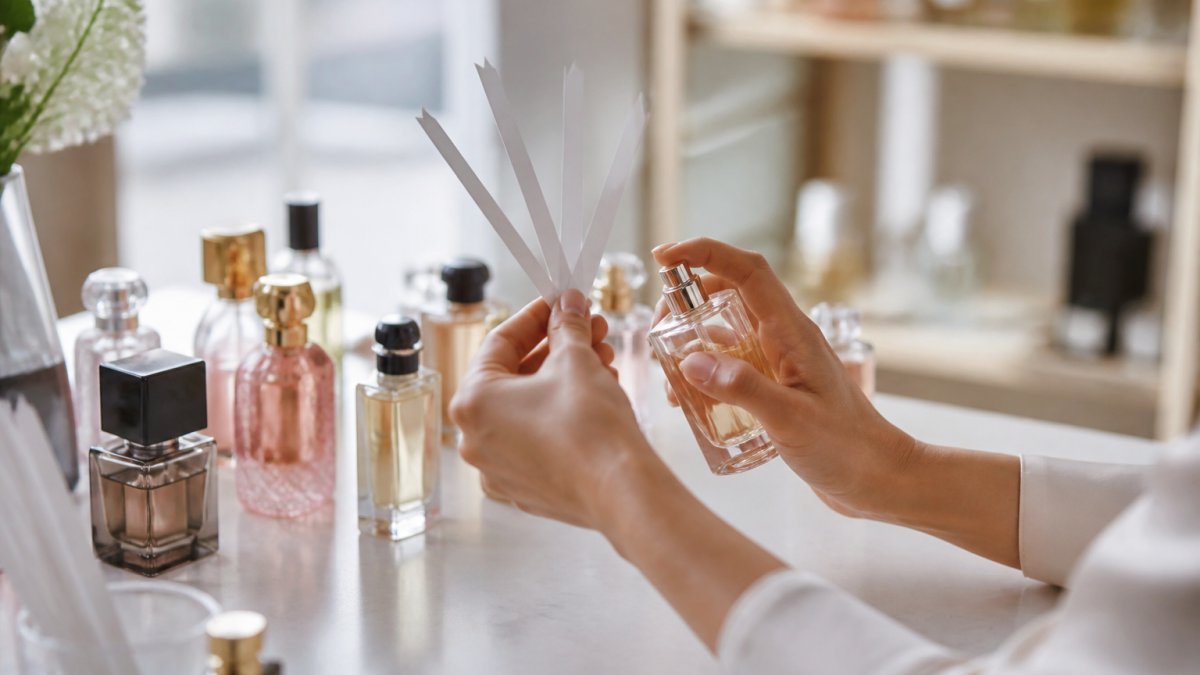
The Right Way to Sample and Compare
Start with paper strips for a general sense of a fragrance's character. Spray once, smell immediately for the top notes, then again after 5 minutes for the heart notes. This gives you a quick preview without committing to skin application.
If it passes the strip test, apply it to pulse points like your wrists, inner elbows, or behind your ears, warmer areas that help fragrance develop naturally. Apply to one wrist only, then wear it for at least 4-6 hours.
Never test multiple fragrances on your skin at once, your olfactory system will fatigue and impressions won't be accurate. Space tests over different days, or use different body parts and wash in between.
Consider sample sets or decants before committing to a full bottle, many retailers offer discovery sets at lower prices. Testing over multiple days matters because how a scent feels on day one often differs from day three or four.
Under the Lemon Trees EDT 3.4oz by Maison Margiela →
Consider the season and time of day too. A fragrance that feels perfect in winter might feel cloying in summer, and an evening scent might be too heavy for morning. Your signature scent should work year-round, but understanding these variations helps you choose well.
Finding Your Signature Scent: A Practical Framework
Finding your signature scent follows a logical progression: identify your preferences, consider what you already wear, test systematically, and commit to something that feels authentically you.
Identifying Your Scent Preferences and Personality
Ask yourself what scents you gravitate toward in other contexts. Fresh and clean, or warm and spicy? Florals, or too sweet? Woody, grounding or too heavy? Your answers reveal your natural scent preferences.
Consider your lifestyle too. In a conservative professional environment, choose moderate sillage and sophistication; if you favor bold, artistic expression, a statement fragrance may suit you better. Your signature scent should feel like an extension of your personality, not a compromise.
Think about the emotions you want your fragrance to evoke. Citrus and aromatic fragrances feel energizing, floral and amber feel romantic or sensual, and woody fragrances feel grounded and sophisticated.
Consider practical factors too: budget, skin type, and daily wear preference. A signature scent you can't afford to repurchase isn't practical. Sensitive skin may require more careful testing or clean fragrance options, and if you prefer minimal fragrance, a light eau de toilette may suit you better than a concentrated eau de parfum.
Considering Existing Product Scents You Already Own
Before testing new fragrances, audit what you already own. The candles, soaps, and body products you love reveal your authentic preferences better than what you think you should like.
If you already own fragrances you wear regularly, that's valuable information. A fragrance you've worn for years without tiring of it may already be your signature scent, returning to it suggests it aligns with your chemistry and preferences.
Pay attention to fragrances you've abandoned. Was it too heavy, too light, too sweet, or did it fade too quickly? Understanding what doesn't work narrows down what might. If you've consistently disliked amber fragrances, don't force yourself into one just because it's popular, your signature scent should feel effortless, not like a compromise.
Sustainable and Clean Fragrance Alternatives
If you're concerned about ingredient transparency or environmental impact, clean and sustainable fragrances are increasingly available, emphasizing natural oils, sustainable sourcing, and transparent ingredient lists.
Clean fragrances typically avoid synthetic chemicals some people find problematic, though "clean" isn't a regulated term. Look for brands that list ingredients and sourcing practices, many luxury houses now highlight sustainable sourcing, such as patchouli essence from Bali or rose petals from regions known for quality cultivation.
Sustainable fragrance doesn't mean lower quality, many niche and luxury fragrances prioritize both sustainability and performance. Read product descriptions carefully and choose brands transparent about sourcing and production.
At PERFUME IN THE CITY, we curate fragrances that balance quality, performance, and responsible sourcing. Many luxury houses now highlight sustainable sourcing, such as patchouli essence from Bali or rose petals from regions known for quality cultivation.
Fragrance Etiquette and Professional Settings
Your signature scent should work across contexts, including professional environments. Fragrance etiquette in the workplace is about respect, not everyone wants to smell your fragrance, and some people have sensitivities or allergies.
The general rule is subtlety. Your fragrance should be noticeable only to people within arm's length. If colleagues across the room can smell you, it's too much.
Consider your specific workplace culture. Creative industries tend to be more permissive with bold fragrances. Conservative fields like law or finance call for more restraint.
Some workplaces have fragrance-free policies due to sensitivities or allergies. Respect these boundaries. Your signature scent matters to you, but not at the expense of colleagues' comfort or health.
For virtual meetings, fragrance doesn't matter. For in-person interactions, moderate application and a scent that feels professional, not overly sweet, spicy, or heavy, ensures your fragrance enhances rather than distracts from your professional presence.
Finding your signature scent is an investment in how you present yourself to the world. The process requires patience, honest self-assessment, and proper testing, but the payoff is a fragrance that feels authentically you and makes you feel confident every time you wear it.
Frequently Asked Questions
How do I find my signature scent if I've never worn perfume before?
Start by exploring fragrance families: citrus, floral, woody, and gourmand. Visit a retailer with samples and test 2-3 fragrances from different families on your skin, not paper. Wait 15 minutes to feel the dry down. Consider your lifestyle, personality, and existing scents you enjoy. A signature scent should feel natural and make you confident when you wear it.
Why does perfume smell different on my skin than on a tester strip?
Your skin's unique chemistry, pH level, and natural oils interact with fragrance molecules, changing how it smells and how long it lasts. Tester strips show the fragrance in isolation, but your skin's warmth and chemistry create a personalized scent experience. This is why testing directly on your skin is essential before committing to a signature scent.
What fragrance families should I explore to find my signature scent?
Key fragrance families include citrus (fresh, energetic), floral (romantic, elegant), woody (warm, sophisticated), amber (sensual, cozy), and gourmand (sweet, indulgent). Each family has distinct characteristics based on top notes, heart notes, and base notes. Explore multiple families to discover which resonates with your personality and lifestyle, then narrow down to specific fragrances within those families.
How long should I test a perfume before deciding it's my signature scent?
Test a fragrance for at least 3-7 days to understand its full life cycle. Fragrance evolution matters: top notes fade within 15 minutes, heart notes develop over the next hour, and base notes emerge during the dry down. You need to experience how it performs throughout the day and whether you still enjoy it after the initial freshness fades. This prevents blind buys you'll regret.
What's the difference between eau de toilette and eau de parfum when choosing a signature scent?
Eau de toilette (EDT) contains 5-15% fragrance concentration and lasts 4-8 hours, offering a lighter, fresher feel. Eau de parfum (EDP) contains 15-20% concentration and lasts 6-12 hours, providing deeper sillage and longevity. Choose EDT for everyday wear and warm weather; EDP for evening, professional settings, or when you want stronger projection. Your signature scent might be different depending on the concentration.
Are clean and sustainable fragrances as long-lasting as traditional perfumes?
Clean fragrances using natural oils and sustainable sourcing can perform well, though longevity depends on fragrance concentration and individual skin chemistry rather than whether it's natural or synthetic. Test sustainable options on your skin to evaluate performance before committing; don't assume clean automatically means shorter-lasting.


